Review · Charging & power · 1 model
Anker 100W 3-port charger (B121B) review: the split is printed, the display is a gimmick, the cable is the catch
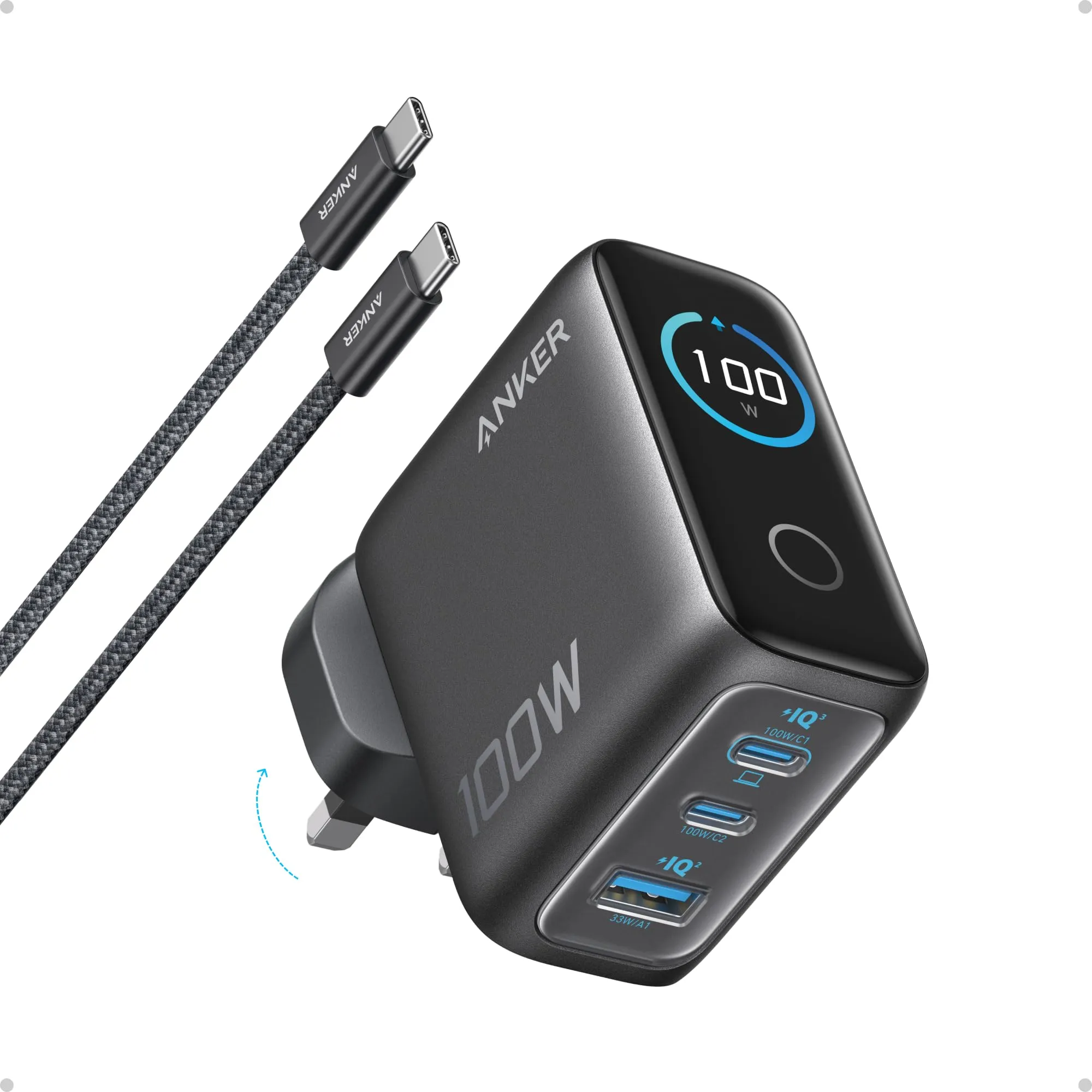
A 100-watt charger with two USB-C ports, one USB-A, folding UK pins and a touch display that shows what each port is drawing. The display gets the attention; the useful part is that Anker publishes exactly how the 100 W is shared — 70 + 30, 95 + 5, 80 + 12 + 7.5 — which most rivals do not. This review is about whether that is worth the bag space, and the two things Anker's own page gets wrong.
Verdict
What it is
the charger reviewed
Anker 100W 3-port
- Maximum output
- 100 W
- Weight
- 212 g†
Check price on Amazon.co.uk
A gallium-nitride mains charger rated at 100 W on a single USB-C port, with a second USB-C, a USB-A, folding UK pins and a small touch screen on the front face that shows power, temperature and usage per port. Anker’s body copy gives 69 × 55 × 34 mm and 212 g without the plug. A USB-C cable is in the box. The colour on the listing we imported is dark grey.
Strengths
- 100 W single-port and a printed split for every combination
- Touch display shows what each port is drawing
- Folding pins; cable in the box
Limitations
- Anker's page contradicts itself on size and weight
- PPS not stated — check before buying it for a Samsung
- Needs a 100 W-rated cable for the headline figure
Good for
- a 14-inch MacBook Pro or 90–100 W Windows laptop plus a phone
- a desk that charges three things
- people who like to see the numbers
Look elsewhere if
- a 16-inch MacBook Pro at full speed (140 W)
- the smallest possible bag
The split — why this charger
Every multi-port charger shares its total wattage between ports, and the sharing rule decides whether your laptop charges or merely stops discharging while a phone is plugged in. Most makers describe the rule as “smart” or “intelligent distribution” and leave it there. Anker publishes a table: USB-C1 and USB-C2 together give 70 + 30 W or 95 + 5 W; USB-C1 and USB-A give 67 + 33 or 95 + 5; all three give 80 + 12 + 7.5 W. USB-C1 is the priority port and USB-A alone gives up to 33 W.
Read that against your kit. A 14-inch MacBook Pro or a 90-to-100 W Windows laptop on C1 gets 70 W with a phone on C2 — a real charge under load. Add earbuds on USB-A and the laptop drops to 80 W while the two small devices get 12 and 7.5 — still fine. The 95 + 5 case is for a phone that draws almost nothing, such as one already full. Knowing this in advance is worth more than any feature on the front.
The display
The touch screen shows what each port is drawing and the charger’s temperature, and lets you switch modes. It is accurate and pleasant and, in daily use, ignored: a charger lives behind a desk or in a bag, and the number that matters — is the laptop charging? — is on the laptop. It adds cost and a surface to scratch. We would not choose the charger for it and would not avoid it because of it.
The cable
USB PD delivers 100 W as 20 V at 5 A, and only a cable with an e-marker chip is allowed to carry 5 A. A standard cable is rated 3 A — 60 W — and the charger will politely supply 60 W without a word. Anker says so on its page and includes a cable, but does not state the cable’s rating on the UK listing. Assume the included one is 100 W-rated because Anker says the charger needs one; if you use your own, check it is marked 100 W or 5 A.
PPS, and Samsung
Anker’s UK page lists USB PD at 20 V 5 A and does not mention PPS. Samsung’s Super Fast Charging — 25 or 45 W — needs PPS and, at 45 W, a 5 A cable. Without it a Samsung charges at standard fast-charge speed and reports “Fast charging” rather than “Super fast”. This is not a fault, but a mismatch: for a household with a recent Samsung phone, the UGREEN Nexode 65 W or Belkin 65 W state PPS and the Anker does not.
Anker’s page disagrees with itself
Two figures on Anker’s own UK page contradict each other. The body copy gives the size as 69 × 55 × 34 mm and the weight as 212 g excluding the plug; the specification table on the same page prints 15 × 11 × 5.5 cm and 74 g. The table’s size is almost certainly the box, and 74 g is implausible for a 100 W GaN charger with a screen. We publish the body-copy figures and mark them as a conflict in our data — you should treat the size as “about 7 × 5.5 × 3.5 cm” and the weight as “about 200 g, more than a phone”.
Safety
A 100 W charger cannot overpower a phone: under USB PD the phone requests what it can take and the charger supplies that or less. The safety question with chargers is counterfeits, and Electrical Safety First’s advice is to buy from a reputable retailer rather than a marketplace third party — on Amazon, the brand’s own listing with a UK plug, which this is.
Strengths
- 100 W single-port and a printed split for every combination
- Touch display shows what each port is drawing
- Folding pins; cable in the box
Limitations
- Anker's page contradicts itself on size and weight
- PPS not stated — check before buying it for a Samsung
- Needs a 100 W-rated cable for the headline figure
Good for
- a 14-inch MacBook Pro or 90–100 W Windows laptop plus a phone
- a desk that charges three things
- people who like to see the numbers
Look elsewhere if
- a 16-inch MacBook Pro at full speed (140 W)
- the smallest possible bag
Who should buy it
- A 14-inch MacBook Pro or 90–100 W Windows laptop plus a phone, on a desk or in a bag.
- Anyone who wants the multi-port arithmetic in writing before paying.
- Someone charging three things from one socket and happy to see the numbers.
Who should not
- A 16-inch MacBook Pro at full speed — that is 140 W and Anker’s 140 W four-port.
- Samsung owners who want Super Fast Charging — PPS is not stated.
- Anyone for whom 200 g and a screen are too much charger for a phone and a tablet; the Nano 30 W or a 45 W.
Sources
Facts checked 24 September 2026
- Samsung UK support — How to use Super fast charging — Manufacturer documentation, checked 23 September 2026
- Electrical Safety First — USB chargers guidance — Standard or regulation, checked 23 September 2026
- Anker UK — Charger (100W, 3 Ports, Smart Display) B121B product page — Manufacturer documentation, checked 23 September 2026
- Amazon.co.uk listing (Anker) — Retailer listing, checked 23 September 2026
What does each port get with two devices plugged in?
Anker publishes it: USB-C1 plus USB-C2 gives 70 + 30 W or 95 + 5 W depending on what is connected; USB-C plus USB-A gives 67 + 33 or 95 + 5; all three ports gives 80 + 12 + 7.5 W. USB-C1 is prioritised — put the laptop there. Those figures are the reason to buy this over a charger whose maker says 'intelligent distribution' and nothing else.
Do I need a special cable?
For the full 100 W, yes: a 5 A cable with an e-marker, sold as 100 W-rated. A standard 3 A cable caps the laptop at 60 W and nothing tells you. Anker says a 100 W-rated cable is needed and includes one; its rating is not stated on the UK page.
Is it good for a Samsung phone?
Anker's UK page does not state PPS for this charger, and PPS is what Samsung's Super Fast Charging needs. The phone will charge at ordinary fast-charge speed. If you own a Samsung and want 45 W, the UGREEN 65 W or Belkin 65 W in our roundup state PPS.
How big is it really?
Anker's UK page contradicts itself: the body copy says 69 × 55 × 34 mm and 212 g excluding the plug; the spec table says 15 × 11 × 5.5 cm and 74 g, which look like packaging and an error respectively. We publish the body-copy figures and flag them as a conflict. For a 100 W GaN charger with folding pins, about 7 × 5.5 × 3.5 cm and 200 g is plausible; 74 g is not.
Related reading
Shortlist · Charging & power
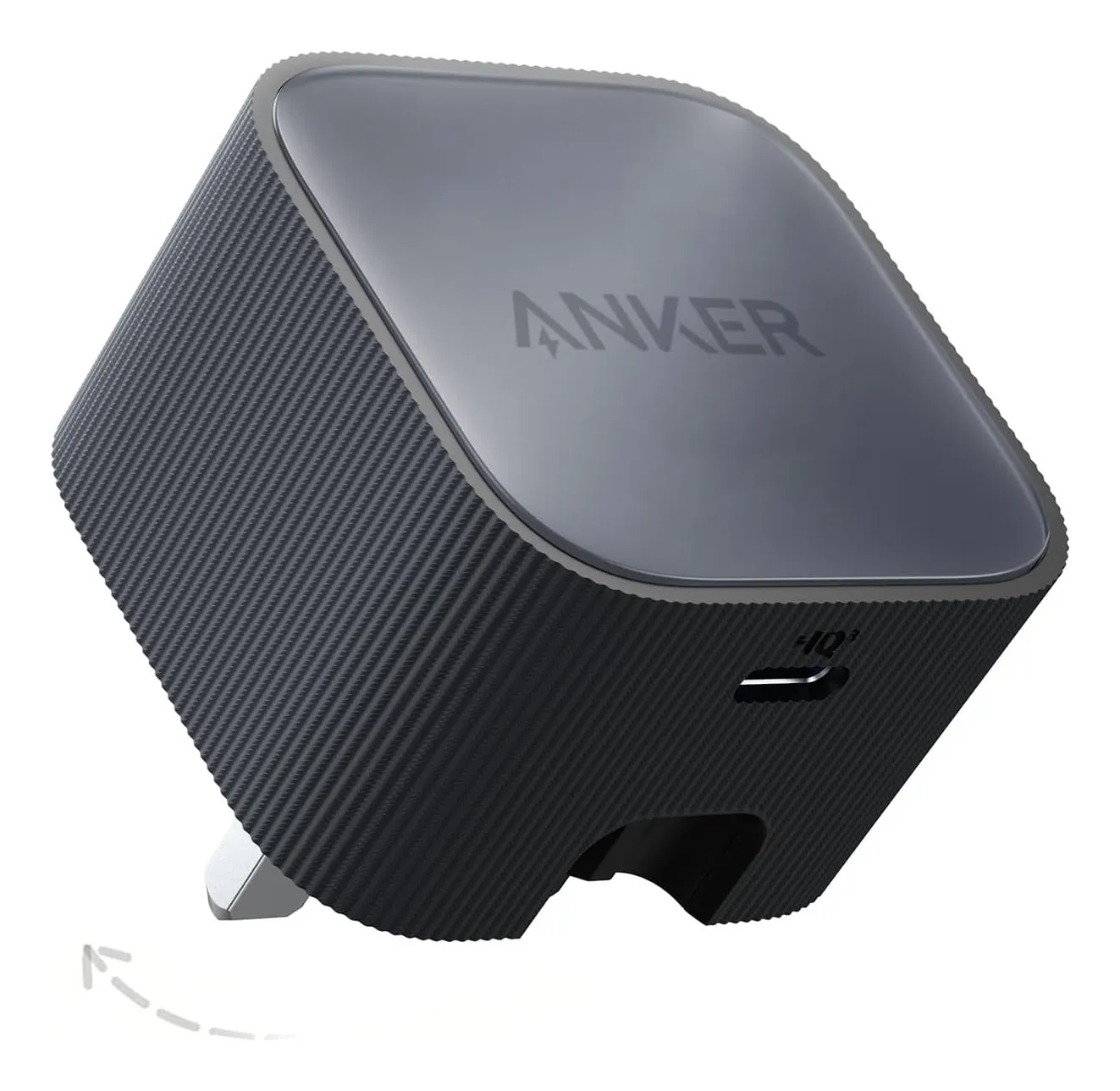
Compact USB-C chargers that replace the box of plugs: six sizes from 30 W to 140 W, with the port splits that matter
The drawer of chargers exists because every device came with its own. One USB-C charger of the right wattage replaces all of them — but 'the right wattage' depends on what you plug in at the same time, and only some makers publish how the power is shared. Six UK-plug GaN chargers from 30 W to 140 W, compared on the figures their makers actually state.
Guide · Charging & power
Charger wattage, PD, PPS and cables: what actually charges your devices fast
A USB-C charger's wattage is a ceiling, not a promise. What a phone or laptop actually draws is negotiated — by USB Power Delivery, by Samsung's PPS, by the chip in the cable — and the negotiation fails silently: the device charges slowly and nobody says why. This guide explains the three things that have to agree, using the figures Anker, UGREEN, Belkin and Samsung publish for their own products.
Shortlist · Charging & power
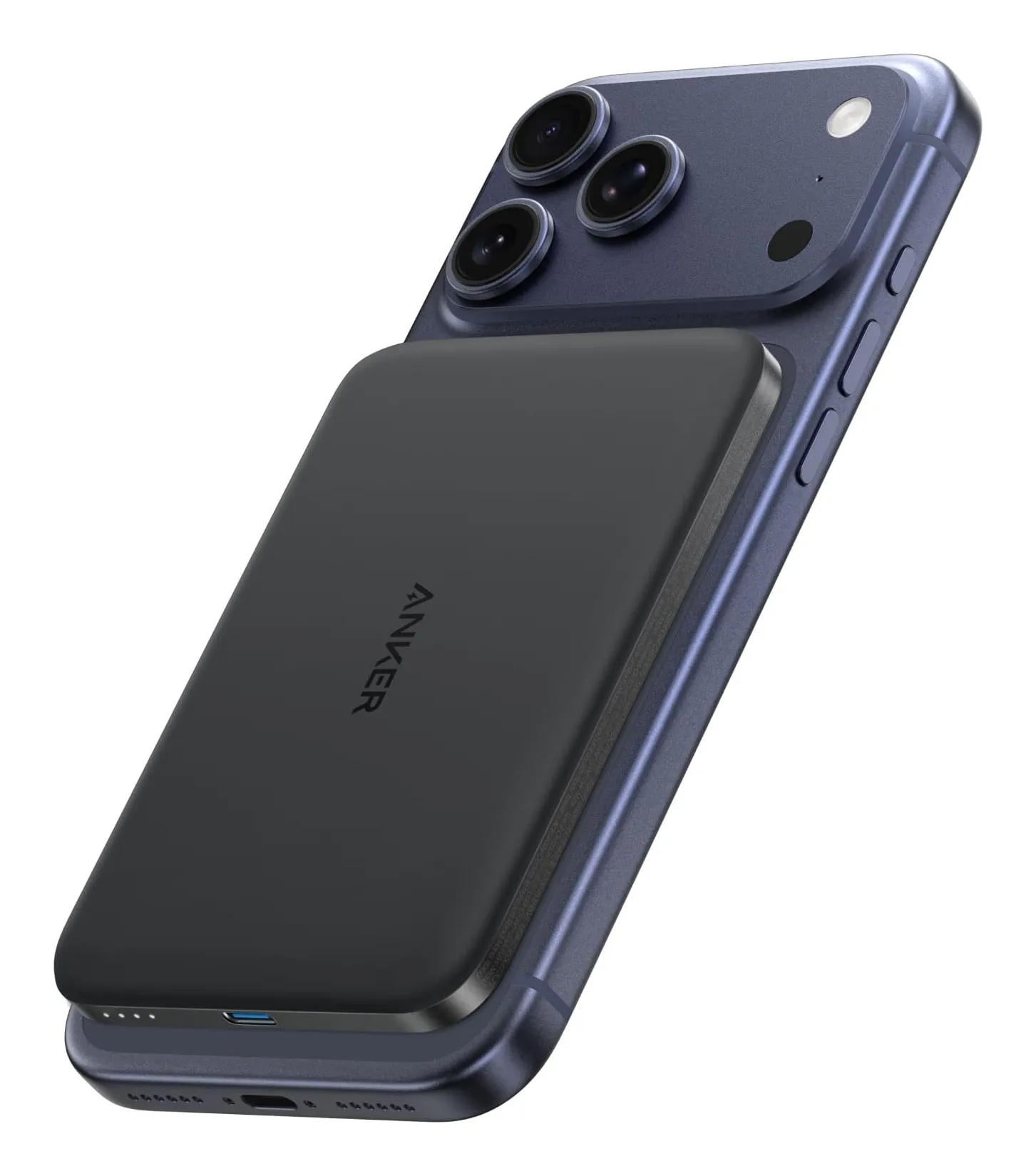
Power banks for everyday travel: six from a 122 g magnetic slab to a 99.75 Wh laptop brick, plus the 2026 flight rules
A power bank is sold by a number that is not the one that matters. The milliamp-hours on the box are cell capacity; roughly two-thirds reaches your phone, and the airline cares about watt-hours, which most makers do not print. Six banks compared on stated Wh, delivered capacity, port wattage and weight — plus the CAA rules that tightened on 27 March 2026.